
NOVA Adventures
Take an Adventure through your computer.

Bill Yates

- The Anthropological Times
- Seek the truth of history, as without evidence it's just words in a book...
Showing posts with label Adventures in Archaeology. Show all posts
Showing posts with label Adventures in Archaeology. Show all posts
Wednesday, April 16, 2014
HISTORICAL DATA SHOWS TRAIL OF TEARS IMPACT ON CHEROKEE SKULL SIZE

Tuesday, March 25, 2014
Were the ancient Greeks and Romans color blind?

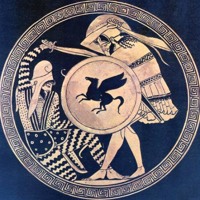
Homer left historians with the impression that the ancient Greeks and Romans had an underdeveloped appreciation of color. The ancients, in fact, were a shade more sophisticated than that and understood color in a completely different way to us, argues Mark Bradley…READ MORE AT…http://www.abc.net.au/radionational/programs/bodysphere/5267698
Monday, March 24, 2014

Sunday, March 23, 2014
Intimate tattoo of man's name discovered on inner thigh of 1,300-year-old MUMMY
A tattoo of a man's name has been discovered by scientists on the inner thigh of a 1300-year-old mummy.
Egyptologists at the British Museum made the startling discovery while examining the ancient mummified body of a Sudanese woman, thought to have died around 700 AD.

Egyptologists at the British Museum made the startling discovery while examining the ancient mummified body of a Sudanese woman, thought to have died around 700 AD.
The symbol, tattooed on the skin of the inner thigh of her right leg, spells out the ancient Greek characters M-I-X-A-H-A, which translates as Michael.
But it's not for a secret lover however, as the tattoo is thought to be a protective biblical symbol representing the Archangel Michael…READ MORE AT…http://www.mirror.co.uk/news/weird-news/egypt-mummy-tattoo-intimate-ink-3274266
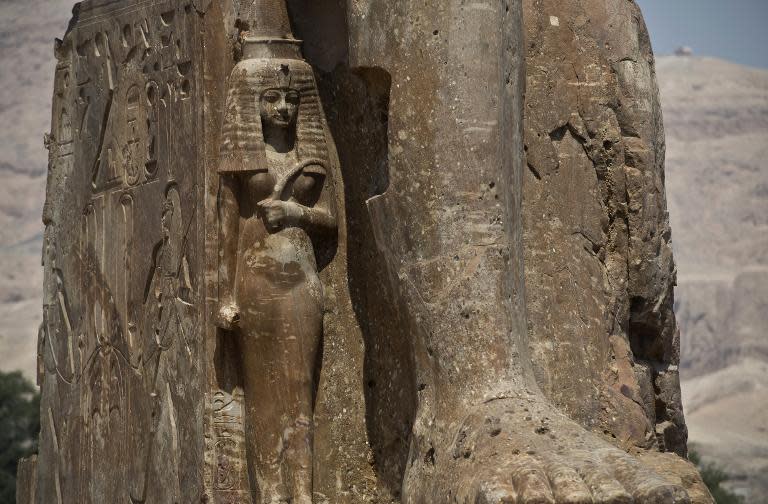
Two more colossal pharaoh statues unveiled in Egypt
Luxor (Egypt) (AFP) - Archaeologists on Sunday unveiled two colossal statues of Pharaoh Amenhotep III in Egypt's famed temple city of Luxor, adding to an existing pair of world-renowned tourist attractions.
Wednesday, March 19, 2014
Working in Archaeology is a connection to the past.
One of the greatest joys of Archaeology is unearthing an artifact that may not have been touched for a thousand years or more. You hold history in your hand. At that moment you have an indelible bond with the person who last touched it. Was the piece flaked off as the flintknapping plied their craft; or is it a tool worn to a nub and tossed away? We can all read about the past, but working as an Archaeologist you can experience it.
Above are some of the pieces I've found:
Back Row: All the pieces except for the big one on the right are flakes. Those are the pieces that break off when the tools or weapons are being formed. The big one is a bi-facial. That’s a piece that has been worked on both sides. The craftsman will hone or smooth a piece to finish their work. We don’t know if this piece was finished or broke while being formed and discarded.
Second Row: This is a 450 million-year-old Crinoid fossil that had been carefully chiseled out of a probable limestone formation and made into a necklace.
First Row: The piece on the left was a spearhead. We can determine this by the size of the piece. The one in the middle is an almost formed arrowhead. As it was being worked a small part flaked off and the piece was tossed away. The one on the far right is a scrapper. In fact, it resembles a small wood plane. The type of tool used by woodworkers to extract small slices of wood. This piece would have been used to clean the hides of any fat or muscle still attached to the hide.
Monday, March 10, 2014
CLOVIS GENOME SETTLES DEBATE ON INDIGENOUS AMERICAN LINEAGE

Inhabiting what is now North America around 12,600 years ago the Clovis people (named after the type site in New Mexico) were not the first humans to walk this land, but they do represent the first widespread occupation of the continent – until the culture mysteriously disappeared only a few hundred years after its origin…READ MORE AT… http://www.pasthorizonspr.com/index.php/archives/02/2014/clovis-genome-settles-debate-on-indigenous-american-lineage
Sunday, November 24, 2013
Mystery of Tut's Father: New Clues on Unidentified Mummy

Egyptologists have uncovered new evidence that bolsters the controversial theory that a mysterious mummy is the corpse of the heretic pharaoh Akhenaten, husband of Nefertiti and, some experts believe, the father of King Tut.
The mummy's identity has generated fierce debate ever since its discovery in 1907 in tomb KV 55, located less than 100 feet (30 meters) from King Tutankhamun's then hidden burial chamber.
Saturday, November 16, 2013
Egypt: Israel has returned 90 stolen antiquities: Collection had been put on block by Jerusalem auction house

Israel has returned a collection of 90 antiquities after discovering that the artifacts – presented for sale at auction - had been stolen, Egyptian authorities said on Monday.
The collection reportedly included clay vessels and vases, stelae and cultic figurines.
Antiquities theft is a huge problem for archaeologists…
Read more at: http://www.haaretz.com/archaeology/1.557448
King Tut's Sister Stolen in Massive Museum Heist

PRETORIA, South Africa - King Tut's sister is missing and Egypt has issued an international alert for her return.
UNESCO and Interpol are working with Egyptian authorities to recover the priceless artifact, a limestone figurine of the young pharaoh's sister from the 14th century BC. The young girl holds a piece of fruit and her hair flows loosely on one side-a symbol of her youth-but her head is held high, a decidedly regal look on her face.
Read more at: http://news.yahoo.com/king-tuts-sister-stolen-massive-museum-heist-161842178--abc-news-topstories.html
Tuesday, July 30, 2013
Jamestown Colonists Resorted to Cannibalism
Archaeologists have discovered the first physical evidence of cannibalism by desperate and starving English colonists driven by hunger during the starving time of 1609-1619 at Jamestown, Virginia.
The above picture of a skull which show signs of butchering. The slash marks indicate someone either didn't know what they were doing or someone hesitant about the work. The below picture of forensic facial reconstruction shows what she may have looked like.
Read the whole article at the National Geographic: http://news.nationalgeographic.com/news/2013/13/130501-jamestown-cannibalism-archeology-science/
 |
| Shallow chops, top, on the victim's skull. Photograph courtesy Don Hurlbert, Smithsonian |
 |
| Photograph courtesy Don Hurlbert, Smithsonian; art by StudioEIS |
Who is the Kennewick Man
The skull depicted below may change what is to believed the history of the United States. Found along the Columbia River in 1996 in Kennewick, Washington, first the skull and then most of the skeleton remains date from 8500 B.P. to 4500 B.P. but is not Mongoloid, the typical Native American ancestor. The finding caused a furor among the Native American community, so much so it took the Ninth Circuit United States Court of Appeals to keep in the possession of the US Department of the Interior; instead of being skirted away and immediately buried as the Native Councils wanted to do. Why did the ancient bones of one person cause such a problem? Because if analyzed to be of non-Native descent then the term Native American would no longer apply. In fact those of Western Europe would be the Native American's.
I conversed with the Laura Phillips the Archaeology Collections Manger at the Burke Museum of Natural History, where the remains resides about what testing has been done since the court's decisions and she said we recently asked the same question. She referred to their blog for the answer: http://burkemuseum.blogspot.com/2011/07/ask-burke-kennewick-man-updates.html
 To read one of the original investigators, James Chatters, findings click here: http://www.mnh.si.edu/arctic/html/kennewick_man.html
I conversed with the Laura Phillips the Archaeology Collections Manger at the Burke Museum of Natural History, where the remains resides about what testing has been done since the court's decisions and she said we recently asked the same question. She referred to their blog for the answer: http://burkemuseum.blogspot.com/2011/07/ask-burke-kennewick-man-updates.html
To read one of the original investigators, James Chatters, findings click here: http://www.mnh.si.edu/arctic/html/kennewick_man.html
Sunday, May 5, 2013
Frontier fort from Revolutionary War found in Georgia
http://news.yahoo.com/frontier-fort-revolutionary-war-found-ga-145450206.html - Yahoo News

Less than two months after British forces captured Savannah
in December 1778, patriot militiamen scored a rare Revolutionary War victory in
Georgia after a short but violent gun battle forced British loyalists to
abandon a small fort built on a frontiersman's cattle farm…CLICK LINK TO READ
MORE…
Sunday, April 14, 2013
For 40 Years, This Russian Family Was Cut Off From All Human Contact, Unaware of WWII
http://www.smithsonianmag.com/history-archaeology/For-40-Years-This-Russian-Family-Was-Cut-Off-From-Human-Contact-Unaware-of-World-War-II-188843001.html - Smithsonian.com

Karp
Lykov and his daughter Agafia, wearing clothes donated by Soviet geologists not
long after their family was rediscovered.
Siberian
summers do not last long. The snows linger into May, and the cold weather
returns again during September, freezing the taiga into a still life awesome in
its desolation: endless miles of straggly pine and birch forests scattered with
sleeping bears and hungry wolves; steep-sided mountains; white-water rivers
that pour in torrents through the valleys; a hundred thousand icy bogs…CLICK
LINK TO READ MORE…
SUMATRAN CAVE YIELDS ANCIENT ART AND 66 HUMAN BURIALS

http://www.pasthorizonspr.com/index.php/archives/04/2013/sumatran-cave-yields-ancient-art-and-66-human-burials - Past Horizons: Adventures in Archaeology
Rock art and human burials found in a
Sumatran cave will allow a better understanding of the prehistoric human
occupation of Southeast Asia…CLICK LINK TO READ MORE…
Subscribe to:
Posts (Atom)